Brussel’s city center was turned into a car-free zone this weekend to celebrate “Heritage Days“, an event where Belgians celebrate their heritage and where the international embassies here in town are encouraged to open their doors to visitors and to celebrate their respective traditions. That includes examples like Hungary’s embassy offering Hungarian dance courses for children.
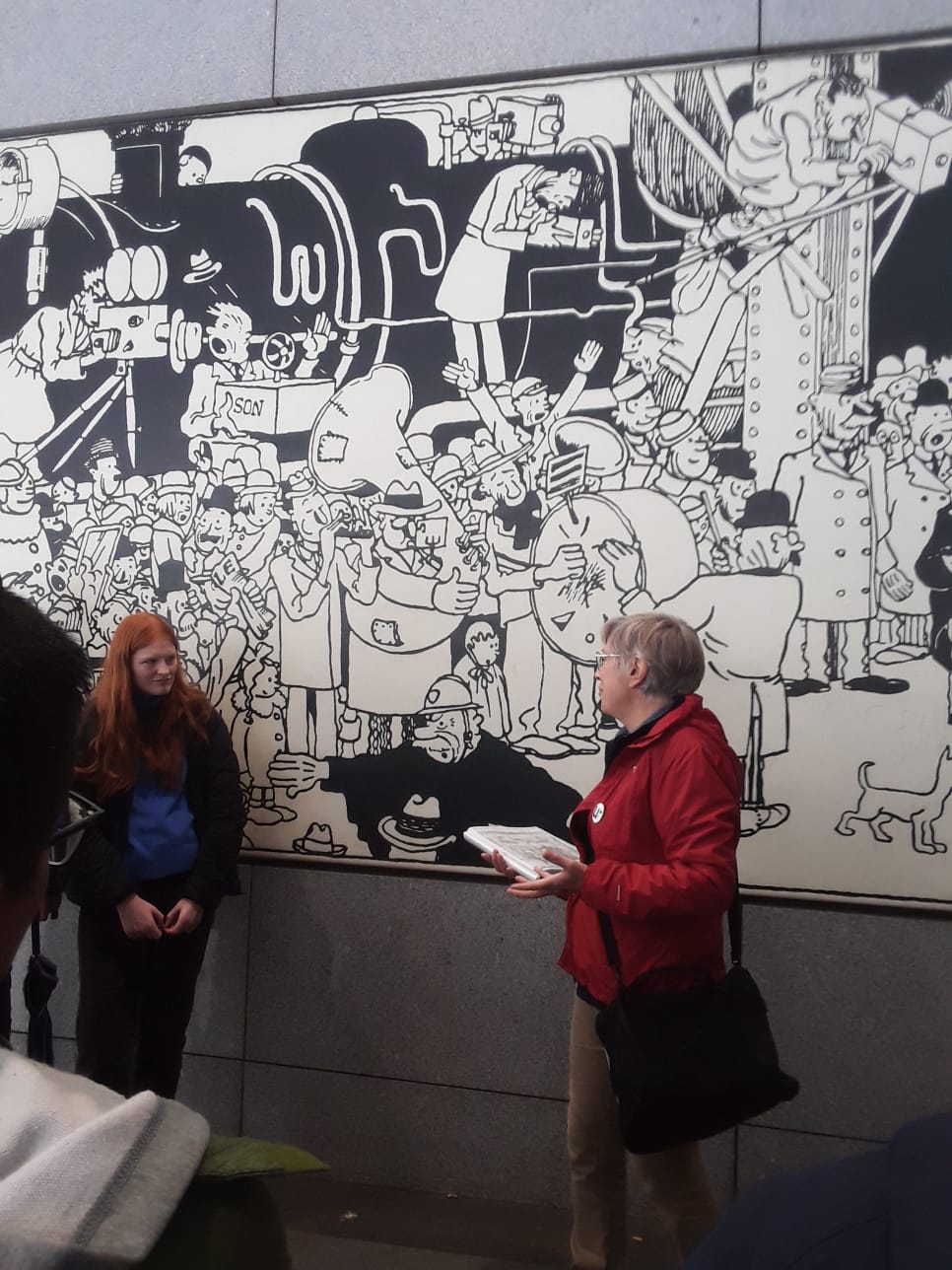
This year’s theme was “Traces of Colonialism” and emphasized the physical and social repercussions, scars and remainders of Belgium’s colonial legacy. I took a tour with the lovely Marie-Louise, a retired secondary schoolteacher, who took us on a “Decolonization” tour of the Luxembourg area of Brussels, with stops at a park where a statue of Colonel Emile Storms, a brutal figure in the colonization of Congo, was removed July 2022, as well as a visit in front of the Congolese embassy, adorned with three large prominent portraits of Patrice Lumumba.
The Congolese have not played an active role in this year’s Heritage Day and it is largely understandable. To return to a central topic of The Cooperative Economy, cooperation is a complex phenomenon which requires applying both sympathy and empathy, building up trust through dialogue and creating legitimate channels of communication and coordination. And it involves a bridging of “Otherness”, closing the divide between “Us” and “Them”. This is a difficult thing to achieve when differences are physically apparent, as they are when Belgians are white and Congolese are black.
The fact of the historically forced Otherness of the victims of colonization makes it difficult to achieve common ground. The relative indifference of a large part of the Belgian populace does not help. One possible framing of the discourse could be around trauma and healing, as Gabor Mate has discussed in an interview on Democracy Now earlier this week. It is a hard-fought process, but the result is worth the effort.

Leave a Reply