Coop:
erat
ion!
Cooperation is messy and complex, yet it undergirds our everyday lives. However, the economics (and to a lesser extent, management) profession has largely neglected cooperation as a motivator, in favor of competition. However, the challenges of the present and future, like climate change and global inequality, will require actors in the economy, including entrepreneurs, governments and academics to harness cooperation much more than they will competition.
Therefore, econ.coop seeks to bring together the economics and management of cooperatives and on cooperation more generally. This of course includes discussions of cooperative theory (like discussions and interpretations on the principles and values) as well as practices, featuring research like case studies and field reports.
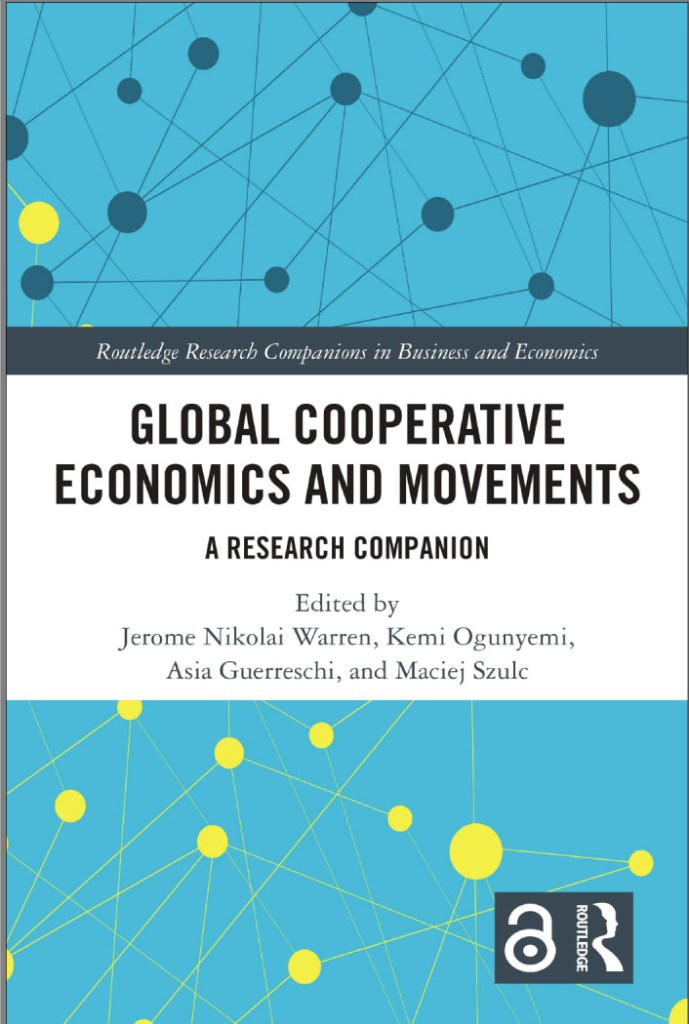
We are interested in building up a network of researchers, especially around the Routledge Handbook of Cooperative Economics & Management and its fortchoming Companion, Global Cooperative Economics & Movements.
Our partners include a number of research institutions and practitioners from around the world.

Selected Writings
-
This post was inspired by my recent visit to the Louvre Museum in Paris. Leaving people as mere aggregates promotes individualistic — and frequently — incongruent behavior. As Mark Granovetter comments about people in a fire in a theater, Consider, for example, why individuals in a burning theater panic and stampede to the door, leading…
-
It’s a lovely feeling when you discover your first Google Scholar citation. It’s a bit like losing one’s virginity, I suppose. In this case, the citation was from Sven Haas, in his Master’s thesis at the University of Twenty and TU Berlin on beverage collectives’ response to Covid-19. The paper cites The Cooperative Economy in…
-
All four modules are now complete and you can visit them all at www.econ.coop! This includes the latest, Module 4, which you can access here.

Burial urns found on paros, with hopplon shields, ca. 750 BCE.
